Technology analysis of the latest gadgets, consoles, and computer architectures.

Saturday, October 04, 2008

The New Age of Desktop Computing

From Google apps to Sparkpeople to Facebook apps to Hulu, web applications are taking a more pervasive role in modern desktop computing. We are now able to bank online (uwcu.org), manage a budget and organize transactions (mint.com), and play a game of Go with friends (Facebook.com) without having to rely on anything but an internet browser running on any computer anywhere with an internet connection. It has become so commonplace now that many people may not realize that what used to require an investment of some sort (be it time, money, computer resources, etc.) now require mere seconds to access and use. At what cost will the increased reliance on web applications be? How will this affect the way we use computers in the future? Although I could probably write a book on these topics alone, my goal with this blog posting will be to try and set certain guidelines for web application developers (and users) to keep in mind to ensure that the users' needs are met while capitalizing on the future of desktop computing.

From the 1980s when desktop computing exploded until less than a few years ago, a traditional desktop computing experience would have consisted of a Windows or Mac OS-based machine bundled with applications that serve a variety of tasks, such as productivity (Microsoft Word and Excel), entertainment (Winamp, Windows Media Player, DVD Player), creativity (iPhoto, Fruity Loops), and games (Unreal Tournament, Quake 3, Warcraft 3). Much of the time, many of these applications were bundled with the OS or purchased at the store. Once the Internet became more accessible to computer users, programs were commonly downloaded and installed; I probably have at least 4 CDs worth of downloads, and many more burned CDs of old Linux distributions and floppies of even older backups of downloads before I had a CD burner. It sure was convenient to have enough space to install all of these applications on my computer; I shudder thinking back to when I had to delete an application to make room for another on the 40 MB hard drive of our Apple Mac LC II.


But then, in the mid-1990s, the Internet became more affordable and widespread, and content distribution online provided a means to reduce the acquisition time of software, music, and on-demand video from potentially days, weeks, and greater to hours, minutes, seconds, and milliseconds. AOL provided a new avenue for interactivity and communication, providing channels with initially text-based and then audio and video-based content, and giving millions of people access to e-mail, chat rooms, and instant messaging. E-mail started moving away from the desktop; instead of Microsoft providing access to one's e-mail through desktop applications such as Outlook, AOL started providing e-mail within its all-encompassing Internet application. Many other companies were providing e-mail services during the same time period, but AOL was the one that began the trend of de-emphasizing the importance of the desktop application. Yes, for much of its life, AOL was a desktop application, but with AOL it no longer mattered where you, as a user, were when you connected. You could go to your friend's house and, assuming he or she had a computer, a modem, and a phone line, you could connect to AOL, check your e-mail, browse your favorite "channels", and chat with your friends.

But alas, things changed once more. People realized that there was a world outside of AOL, and that avenue was provided to you by Internet Explorer and Netscape. Schools started outfitting labs of Internet-enabled computers, and instead of AOL people now had Yahoo Mail and Hotmail accounts. My dad listened to the Voice of America using Real Player over the Internet; teachers would listen to music online during Study Hour. E-mail and directory services became the first true web applications, followed by portal pages (such as my.yahoo.com) and search engines. Soon, news and media outlets were springing up online; Launch Media went from sending music videos and interviews bundled around a Flash interface in CD form in the mail to serving on-demand music videos at launch.com. And at this point in time we started seeing more "enablers", or desktop applications, that served the sole purpose of decoding packets from audio, video, and textual services off the Internet. Real Player was extremely popular for streaming audio and video, Winamp for shoutcast [online radio station] streams, and PointCast for news. Macromedia Flash was mostly being used for animation in desktop applications, just as Adobe Acrobat Reader was used for universally viewing documents.

Then came the dotcom boom, or, in more desktop-centric terms, the migration of transactional-based services (and applications) onto the Internet. Along with the added power of the search engine, consumers could now go onto the Internet to learn about new products and become more exposed to competitive pricing than ever before. Most importantly, moving transactions online meant that consumers could buy anything from anywhere instantly (and wait 5-10 days for the item to arrive at your door).

Finally, the desktop applications started to migrate over to the cloud, one-by-one. AOL moved e-mail and eventually their content to aol.com. Microsoft moved Money to money.msn.com (see My Money). Intuit TurboTax moved to turbotax.intuit.com. More and more people are now relying on Google, Yahoo, and Microsoft to retain their e-mail and handle virus and spam detection. Even virus scanning has moved online. Although originally initiated by companies touting the "Web Operating System" or "Web Desktop" (and you've probably noticed by now that I regularly use an online encyclopedia and dictionary), we are now seeing popular productivity apps brought to the net by the likes of Google and Microsoft, music players by the likes of Last.fm and Pandora, and video players by the likes of Youtube and Hulu. There's even online photo editing and video editing apps, online backup solutions, and [ajax]Windows.

And last but not least, chat and chat rooms have evolved into blogs, forums, and text article comments, leading to the social networking revolution. Despite the fact that ajaxWindows looks to be one of the closest, most comprehensive replicas of the desktop computing experience, I would argue that Facebook, Google, and Yahoo are poised to become the face of the new age of desktop computing.

I'm going to start with Facebook. Facebook caught be by surprise when they announced the Facebook Application Platform. I absolutely reviled by Facebook when I first heard people talking about it. It seemed to me like a dating service mashed together with college kids who needed another avenue to waste time talking about people and events (and how drunk they got last night). Eventually (almost 3 years after its advent), I gave in, not because I was bored and needed something to do (trust me, the UW School of Engineering kept me plenty busy), but because I had seen the nice, clean interface (thousands of times better than MySpace), I was concerned about privacy, and I wanted a better way to stay in touch with all of my friends. Most of all, Facebook provided me a means of having a visual representation of my social graph and establishing contact with friends (and friends of friends). So I created my profile, and due to lack of time my activity remained relatively low until the applications started coming in. Photos, Events, the Wall and the Inbox became incredibly useful for sharing and viewing photos from events, inviting people to events or having access to a live birthday calendar, and exchanging messages, both publicly and privately. Then the Application Platform was created, the applications started rushing in, both from Facebook and third-parties, and I found myself using Facebook as a tool to share photos, notes, and videos privately with my friends from my trip to the Philippines. Just recently, Facebook has put on a new look, and the platform is starting to look more and more like a desktop computing environment. Just take a look at Facebook's new interface:


Notice anything familiar? I see a start menu, quick launch, and task bar at the bottom and a menu bar at the top with a search box at the upper right. Scary, huh? Well, maybe it's not exactly frightening the way that organized religion may destroy the world, but it is pretty amazing how close the mainstream has come to a web operating system. With the appropriate host operating system (including the browser), Facebook could easily become the new Windows. No wonder Microsoft made such a significant investment in Facebook...

Yahoo is next in line. This may surprise some people, considering the bad press Yahoo has been getting during the past year or two. But just keep in mind that it wasn't too long ago that Yahoo was king on the web. Even today, Yahoo still has much content and services that rival Google, Microsoft, and AOL. Being the original directory service and providing the first mainstream web desktop to the masses (my.yahoo.com), it shouldn't be a surprise that Yahoo is poised to be king in content, assuming management succeeds at merging all acquired and organic business units successfully around a solid ad platform. And now, they have made the next move, arguably one of the most important decisions since Facebook created the Application Platform: Yahoo has opened up their platform to developers. Essentially, Yahoo has done to the net what it has been trying to do to its business units: create one common platform and one common interface for users. With this move, Yahoo will migrate from being a suppressed voice in social network to a much more prominent one. How else to best compete with Google and Facebook than to more tightly integrate their "10 billion" users of Mail and Messenger to other Yahoo platform applications, websites, advertisers, and other future content producers. In fact, this is a move that makes Google look like they're falling behind.

But Google does have one thing above both Yahoo and Facebook: an ad platform that is extremely effective, and web applications that provide a great web computing experience.

Google has been incredibly active, both organically and through acquisitions, in replacing desktop applications and suites with web-based equivalents. In fact, Google now sells a $50/year/user online productivity suite to businesses that provides e-mail, calendaring, chat, word processing, spreadsheet, and video applications with 10GB of online storage (and 25GB for e-mail). And Google has put the power of Keyhole's desktop application for accessing Earth satellite imagery to maps and has become one of the top destinations for directional-based services.

Google understands better than both Facebook and Yahoo (and almost the entire web community) that a new age of desktop computing is brewing, and Google wants to play an integral part in that. They understand why people have hesitated to adopt these technologies, and are taking steps to ensure more widespread adoption. They have been able to offer commonly used desktop tools to Google users' fingertips. They have taken advantage of the most powerful current web technologies (Flash, AJAX, Javascript) to provide a fast and reliable user experience with their applications. And they are trying to be everywhere, going as far as creating a universal open source phone OS and pushing for widespread adoption to increase usage of the web (and, in turn, Google) in more and more places. And innovation is key, adding APIs to as many Google applications and services as possible to encourage development and usage in many applications and devices.

Finally, Google has an overall system design perspective which is very comprehensive and relatively unique to the web landscape. Google understands that the final step in widespread adoption is to demonstrate to users that the personal computing experience that everyone is used to with their desktop or laptop can be effectively replaced with online applications and services, and at the convenience of accessing and producing anywhere and everywhere, at any time, with any device. As much of a dream this may be for some people and businesses (i.e. the Cloud Computing Initiative), it is somewhat comforting to know that one day the device in your hand need only be powerful enough to provide your user interface and a quality user experience with the services (be it voice, video, etc.) one wishes to partake in.

And to provide this experience, in addition to banking on web technologies, Google has moved onto the desktop, providing a toolbar and applications that create a better overall experience. Google Desktop provided a means to search desktop files and e-mails along with web content all in one place. Google Toolbar provided a one-stop shop for search and Google apps / services. And finally, Google Chrome has provided a fast, reliable experience with Google apps.

Google Chrome should not be looked at lightly. Although the browser is in big part a result from the development of Android [Mobile OS], in a day and age when the browser is becoming more and more the avenue to the new age of desktop computing, Chrome poises Google to become an extremely powerful adversary to Microsoft. This leads me to the main point I've been trying to make (and the reason I started writing this blog posting).

Moving the desktop computing experience isn't as simple as providing the same applications in an equivalent form onto the web. When computing power has come so far that all modern computers can handle most common tasks without any noticeable performance difference to computers 2-4 years old, it is understandable that the desktop computing experience has begun to move more rapidly to distributed, remote systems (such as Google) or to slower, smaller form-factor and/or low-power devices such as the EeePC, the Nokia N800, or the iPhone. But the major difference between moving the applications between other, slower devices and to remote systems is that the source of the speed degradation affects the user experience significantly. Moving applications from fast, local compute systems to slow, local compute systems is not the same as moving applications from fast, local compute systems to fast, remote compute systems, because response time is key. With slow, local compute systems, you lose compute power, but you don't necessarily lose response time, so the user experience only degrades slightly, and can be managed. With fast, remote compute systems, unless your task requires a significant amount of compute cycles (which most modern desktop compute tasks do not), the increased response time will outweigh the gain in performance, and the user experience will remain unbearable for the unforeseeable future. So I would argue that the only true migration path to fast, remote compute systems is to provide techniques to make the user experience as close as possible to the desktop equivalent, and the only way to properly do that is to reduce the amount of requests sent to the remote server. This is the main reason Apple had to create an SDK for the iPhone; the users did not find the long mobile network access time acceptable for the web-based applications they wanted to use. And this is why Google ultimately needs Chrome: to continue adding enhancements to both the web technologies and the browser to ultimately keep response time low for the applications users want to use.

Saturday, September 20, 2008

Celio Redfly and its Reminiscence Effect

The Celio Redfly is a netbook-shaped Windows Mobile extension device that provides a Windows Mobile smartphone user an 8" screen, full keyboard, and touchpad in a light-weight, portable form-factor.


This device lacks a mass storage device and notable processing capabilities; instead, it relies on a Bluetooth or USB connection to a Windows Mobile smartphone to provide the processing power and storage. Thie device essentially provides a Windows Mobile user with a larger screen and keyboard, similar to how a docking station provides a laptop user with access to desktop accessories.

The true qualm I have with this device, however, is that it sounds fairly similar to a design I created close to 5 years ago. I will have to consult certain parties to find out if the drawings are still available somewhere, but the basic jist is the following:

Imagine having a tablet PC but without a mass storage device or CPU; instead, it has enough space and a dock connector to house and interface with a PDA. I envisioned that one day, one would prefer to carry around his/her personal computer in a pocket or purse, hence providing immediate access to personal files and e-mail, etc. As PDA users can relate, although it is convenient to carry a personal device in one's pocket, it is very encombersome to attempt to use such a device for reading literature, browsing the web, or writing a story. As a result, one may choose to carry a laptop around, which adds significant weight to one's baggage. Instead, it would be great to just carry around the PDA only when weight and space is an issue, and use the PDA-extension when a larger screen, keyboard, and additional ports are needed.

Hopefully soon I will be able to post either the original drawing or a new mock-up of it. If anyone finds a prior art or patent on this, let me know :D

Sunday, June 01, 2008

Moving and Expanding an EXT2/3 Partition

Synopsis: Need to move and resize an EXT3 partition.

System Configuration: Gentoo Linux x86_64 2.6.20

Raid-1 Mirror with 60GB of unallocated space at start of drive and a 100GB EXT3 partition.

Brief Backstory: After setting up my media PC with Windows Vista but before my extended business trip to the Philippines, I decided to convert my desktop to a Linux server. When I first purchased this machine over 3 years ago (see historical blog postings for details), I had an extra 40GB hard drive installed that I performed an install of 64-bit Gentoo Linux on. Well, 3 years later, I decided to ditch Windows and use Linux on this machine exclusively. This required a somewhat painful upgrade process that I have yet to finish; I managed to update the kernel and some system utilities before stopping.

Anyhow, one of the changes I made to my system after using Linux exclusively was picking up a second 160GB SATA hard drive so that I could have some redundancy for my data. Now that I have returned from the Philippines and have also accumulated another 200GB of TV content, I am feeling the need to A) add a lot more capacity to my server and B) add a backup medium (aka large external hard drive) that I can rsync to. But in the meantime, I wanted to test the server to see how well it would hold up and also allow me access to my data while I was gone. The Linux server proved to be a success; it ran for over 215 days without a crash. Eventually I had to reboot it to prepare for the partition move and resize, but the Linux system is my most stable between the 3 OSs I currently use daily (Windows XP/Vista, Mac OS X, and Linux).

So, having proven to myself that Linux will be a fine replacement for my desktop OS and will function very well for my future server (and being only 1GB from filling the 100GB data/music partition), I decided to bite the bullet and try to move and resize my EXT3 data partition. I rarely had problems moving NTFS and FAT partitions in the past, so this should be a snap! I have much of my music backed up at mp3tunes.com and a burned CD of my data folder from the past year or so which should be good enough. (In retrospect, I should have done one final backup of everything before proceeding, but more on that later.)

Plot:
I referenced this guide to start. I would definitely come back to this guide in the future if I need to expand an EXT partition to the right (or shrink a partition), but it was a good reference nonetheless. I used the following command (from Page 2) to convert my EXT3 partition to EXT2 (i.e. remove the journal) and performed an fsck/e2fsck to check the filesystem before proceeding.

fsck -n /dev/sda1
tune2fs -O ^has_journal /dev/sda1
e2fsck -n /dev/sda1

I rebooting my computer and loaded Paragon Partition Manager v5 since it was able to recognize my RAID and the EXT3 (now EXT2) partition. Paragon reported no warnings or errors moving the partition to the beginning of the drive and resizing the partition. However, after booting into Linux again and trying to perform a file system check, e2fsck reported the following warning messages repeatedly (acting on different Groups and Blocks):

Pass 1: Checking inodes, blocks, and sizes
Group 0's inode table at 13 conflicts with some other fs block.
Relocate? no


Illegal block #13310 (4294967295) in inode 7. IGNORED.

I used the following command to tell e2fsck to relocate these filesystem structures, providing more console output and status updates. Without the -C 0 and -v, I found that e2fsck would run for days without ending; only when I added "-C 0" (which displays the progress bar) did I notice that e2fsck would loop forever (due to the failure described in the next paragraph).

e2fsck -C 0 -y -v /dev/sda1

After the above warning messages disappear, once e2fsck appears to finally be performing the relocations, the following error message appears repeatedly (acting on different Groups and Blocks):

Error allocating 512 contiguous block(s) in block group 729 for inode table: Could not allocate block in ext2 filesystem

After displaying the last Error, e2fsck will start over again, asking to relocate the same filesystem structures again.

At this point, I found myself fairly frustrated; if only I had broken the RAID mirror and/or rsync'd my partition before this had happened, I could have either copied from one drive to the other and rebuilt the RAID or created a new filesystem and copied the data back. But at the same time, this was a good chance to me to learn more about EXT2 filesystems. I did enjoy that 500-level OS class I took at UW-Madison a few years back, and I am using Linux...

(I apologize for missing any links that I have visited while researching this problem; I will do my best to reference links at the end of this article.)

It was time to update e2fsprogs. Gentoo makes this really easy. I'm not sure what version I had been using, but for the remainder of my work I have been using v1.40.8. Regardless of whether you are using Gentoo or not, I advise downloading the tarball of e2fsprogs, because manually compiling and modifying the source code was ultimately how I was able to restore my filesystem.

I started by using the tool dumpe2fs, which provided me with the superblock information along with detected groups, etc.

dumpe2fs /dev/sda1

If that command completed its dump successfully, you'll know that either your primary or one of your backup superblocks is not corrupted. It will also provide you with useful information such as block size and blocks/group, which will be important when you need to calculate the location on disk to perform dumps of your raw disk.

Next, I used the tool debugfs, which comes with e2fsprogs. This is a very useful tool because it allows you to perform normal filesystem access commands against your raw drive without mounting. I exclusively used 'ls' (and 'cd' when I could), but you could even create a directory if you wanted. Run the tool using the following command:

debugfs /dev/sda1

Once the debugfs console becomes available, type '?' or 'help' for a command list or just jump to 'ls'. When I tried 'ls', I received the following error:

EXT2 directory corrupted

I could not 'cd' or 'ls' other directories because apparently the root inode was corrupt! So debugfs wasn't much help at this point.

The next tool I stumbled upon was lde, or Linux Disk Editor. This tool needs to be installed seperately; it allows for raw access of the partition so that you can look up Blocks, Inodes, etc. LDE has a basic graphical interface, which also helps. Use the following command to run lde:

lde /dev/sda1

The primary superblock is located 1024 bytes from the start of the drive in Group 0, Block 0 (if block size > 1024) or Block 1 (if block size = 1024). Type 'B' to enter the block view mode, then scroll down until you reach 0x400. To change blocks, use '#0', replacing 0 with the block number you desire. Check out this site for the superblock structure definition; based on the dumpe2fs output, you should be able to compare values and verify that you are looking at the superblock in lde.

Although the root inode block number can be extracted by following the superblock information, I decided to go ahead and start adding debug printf statements to debugfs.c. Once I found the block number for the root inode, I went to the block in lde and was able to view the directory listings without any trouble. But debugfs continued to have problems.

I also tried the following command to force e2fsck to byte-swap the data before trying to access the partition.

e2fsck -S /dev/sda1

This produced the same "EXT2 directory corrupted" error message that I received when performing an 'ls' with debugfs. I started searching Google for information about byte-swapping an EXT2 filesystem. I discovered in a forum and by reading e2fsprogs change logs that e2fsprogs for PowerPC actually supported both little-endian and big-endian filesystems and had a way to distinguish between the two. However, at some point Intel proclaimed that all filesystems needed to be little-endian, at which point the PowerPC community followed by disabling big-endian support. The x86-compiled e2fsprogs always only supported little-endian, but provided the "-s" or "-S" flags to byte-swap the partitions.

So I decided to try enabling the byte-swap in debugfs by temporarily defining do_swap=1 in the ext2fs_read_dir_block2 function found in lib/ext2fs/dirblock.c. I initially enabled it without any logical conditions, which meant that every directory block that needed to be read was byte-swapped. Anyways, I found that I was able to perform an 'ls' using debugfs after byte-swapping the root inode. However, every other directory inode was not byte-swapped, so I used the following line of code to only byte-swap the root inode:

if(block == 1539) do_swap=1;

Where "1539" was the root inode block number.

I was then able to access all directories with debugfs :) The final step was to save the root inode after byte-swapping the inode structure elements. To do this, I decided to use an internal write function to perform this operation when I typed 'ls' once in debugfs. There may be a better, safer way to do this, but I knew that I only needed to run this once and quit, so this is the way I accomplished this. After the while loop but before the return in ext2fs_read_dir_block2, I added the following lines of code:

if(block == 1539)
{
printf("\nwriting to disk\n");
retval = io_channel_write_blk(fs->io, block, 1, buf);
}


Where "1539" was my root inode block number.

After compiling this in, run debugfs with the '-w' flag to allow debugfs to modify the filesystem.

sudo ./debugfs -w /dev/sda1

Run 'ls' once and quit. Don't run 'ls' more than once or you'll byte-swap again. Remove the above lines, remove the do_swap=1 line, recompile and run debugfs. 'ls' should now be able to work with all directory inodes.

If you made it this far, great! Go ahead and mount the filesystem, immediately performing an rsync dump or copy to an extra drive!

Conclusion:
I hope this blog proves useful for people with corrupted filesystems as a result of EXT2/3 partition moving with a commercial partition manager. Feel free to leave comments and I will try to help you out as much as I can. This was a great learning experience, but next time I hope to do it with data that can safely scrapped :/


Links (in no particular order):
http://ubuntuforums.org/showthread.php?t=394744
http://www.howtoforge.com/linux_resizing_ext3_partitions
http://uranus.it.swin.edu.au/~jn/explore2fs/es2fs.htm
http://lde.sourceforge.net/lde_use.html
http://www.linux-m68k.org/ext2swap.html
http://linux.die.net/man/8/debugfs
http://linux.die.net/man/8/fsck.ext2
http://www.reedmedia.net/~reed/journal/2002/20020828.html
http://www.osix.net/modules/article/?id=497
http://ubuntuforums.org/archive/index.php/t-714065.html
http://surprise.sourceforge.net/doc/tech-53.html

For those of you unable to recover your filesystem, try the free Windows tool below:

http://www.diskinternals.com/Linux-Recovery/

Saturday, December 01, 2007

Microsoft Surface - One "Big Ass Table"

Microsoft Surface - One "Big Ass Table"


Browsing a Library Catalogue and Looking at Photos in an Entirely New Way

I wouldn't mind browsing a library catalogue and looking at pictures taken throughout the world this way, ultimately using multitouch technology.


TED Talks 2007 - Blaise Aguera y Arcas


Internet-based Video Application for the Mainstream

Yeah, the cellular carrier switch never happened, and I'm still use that crappy Kyocera 7135. And my mediapc is not my old PC and instead uses an AM2 platform in a SFF case (for those of you interested in the components used for this mediapc, stay tuned). However, those aren't the reasons I put together a new Tech Ramble blog post. I was actually sitting here in the Philippines on an extended business trip thinking more and more about how I hate cable TV and love internet-based distribution of traditional video content on-demand, and how Joost really does have the potential to become the next mainstream on-demand video application to replace traditional TV if the content distributors allow it to, and it really got me ready to rant...

I have been using Joost on and off for at least 6 months now; the user interface has improved drastically and the platform has allowed for a great deal of independent artists and content distributors to create channels that allow people to easily gain access to their content from a central location. The embedding of commercials between program segments also works very well, and provides for an interactive experience with the advertising companies as well.

Joost would actually be the ideal platform to allow the content distributor or artist to choose how many ads are required for their shows to allow for a variability to be applied based on viewership and costs associated to the content, etc. One program may require no or minimal ads while another would require 6-10 minutes of ads for a 20 minute program, as in traditional TV programs. I believe this would essentially ease in more traditional content distributors to give Joost a chance and provide their content for a centralized, internet-based remote-controlled user experience.

What I don't like seeing is the industry moving to their own distribution methods using either their own hosted websites or alternative sites to host multi-network content online, and here's why. I own a Macbook Pro, and prior to my upgrade to Leopard (stay tuned for more), the latest version of Joost supported my Macbook Pro remote (yay!). That meant that once I started the application, I was able to sit back and use the remote to browse the menus and select programs to watch, all hosted off of the internet.

This is how I expect future TV to work. I don't want to be required to use a mouse and keyboard to point my browser to a different website and use a less-mature flash-based html video application to watch my favorite shows (sorry nbc.com, comedycentral.com, southparkstudios.com, abc.com, fox.com, hulu.com, etc, etc). Viacom started to take the right step when Joost was first introduced by allowing some of their content to appear on the service (noteably missing The Daily Show and South Park), but lately the content is unplayable on Joost. I know that Joost has been actively trying to negotiate terms with all content distributors, and that's where this article comes in.

If Joost developers and management are reading this, please consider adding more flexibility in ad time based on what the content providers want, provide more flexibility on the types of ads shown to make this transition easier and quicker for traditional TV providers (including the option to upload ads, if revenue sharing can be managed), and allow for a monthly subscription model per channel for a reasonable cost (to bring in more cable content).

Traditional TV content providers, please don't slow down internet-based TV. It is the future of content distribution, and although adding any content online is a great first step, not using a well-designed video application like Joost and *gasp* Youtube prevents users from enjoying the experience of watching TV shows online with the same couch-potato-emphasis that traditional TV (and Tivo-like devices) provide. As someone in This Week in Tech (either episode 121 or 122) pointed out, when people think of using a computer they think of leaning, and people don't want to lean to watch TV; they want to sit or lay back and watch TV. Lets avoid mouse and keyboard usage for watching TV as much as possible, for the sake of watching TV on a computer, as I do here all the time.

More on my mediapc and Leopard later...

Wednesday, March 07, 2007

Heavenly Sword looks really sweet!

I found it! Heavenly Sword was the game they promo'd on Heroes, and since I'm a big fan of Prince of Persia and now God of War, I have to say that this game looks sweet. Check it out:


Now I officially have one reason to buy a Playstation 3.

Wednesday, February 28, 2007

Me Likey iPhone

iPhone...the phone that will make me switch providers. I can't help it, even if Cingular service is crappy in Wisconsin. Why, you ask? Because the Apple iPhone has become the perfect PDA/Phone I've always wanted. It plays music, videos, it has a beautiful color touchscreen, it has WiFi, it comes with a 4-8GB flash drive, and it's a phone...assuming it will be easy to install additional apps, I will be very pleased with this device. Extremely pleased. Here's a picture of the iPhone, for those of you who've been deprived of news for the past few months:

Saturday, February 24, 2007

I am the Mighty Finder!  I can find anything!

Monday, January 08, 2007

I've meant to blog about this when I first read about it, but haven't gotten around to it. Anyhow, check out the sheet of paper capable of storing 450GB of data.

I somewhat enjoyed reading this article at InformationWeek.com comparing Mac OS X with Vista. I think that the final statement from this article places Microsoft and Apple to terms in the way products have always been developed at these companies from the get-go:

"Vista reeks of committee and design by massive consensus, while OS X shines from an intense focus on doing things in a simple, clear fashion and design for the user, not the programmer."

Tuesday, November 28, 2006

iTALK . Apple Cell Phone Spec Commercial

Sweet fake ad leading to the iPhone...I really hope Apple goes through with this concept. I'm really excited, might even switch providers, if the iPhone ends up incorporating a click wheel, and really nice interface, and bluetooth.

Thursday, November 09, 2006

I have I few things I'd like to ramble about in this post, but I'm also kinda lazy, having returned from another long day at work and enjoying a beer, so we'll see.

First, I'd like to cover Microsoft a little bit based on current events. Windows Vista is poised for release by the end of January. I have tried the operating system in beta form about a year ago and, although I did find that the focus on security and a complete rehaul of the network stack would be reason enough to switch (I hate Windows networking in its current form, so slow...), I was not happy with how much more bloated Windows had become (I believe it was using close to 512MB RAM at boot-up) and with further changes of the graphical interface and control structure I did not want to deal with frustrations as a results of finding settings I wanted to change. With more recent developments that I am about to list, I am highly unlikely to upgrade.

1. Vista Home Basic, a crippled version of Vista with no Aero enhanced graphical interface, will come standard with new PCs and even cost more than XP for OEMs.
2. Vista Ultimate, the version of Windows anyone would want to have if they had to upgrade to XP, is projected to cost $450...why would I ever pay $450 for Windows?!?!
3. The educational license isn't going to be as flexible as in the past, potentially requiring servers functioning essentially as license servers.
4. The 64-bit version will only allow Signed Applications and Drivers to run, which means Microsoft has to approve any software package that is allowed to run on Windows.

I will admit that I would love to run a stable and reliable 64-bit operating system, but after my experience with XP-64 (the operating system used more RAM than the 32-bit version, thus bringing out a bad memory management and process scheduling system, and many of the drivers I needed I didn't have access to) and Vista Beta 2 64-bit (which did not successfully install on my PC, after I tried for many hours to get it to work), I think I'll stick with linux and OS X for 64-bit.

Other Microsoft developments I need to rant about:
1. Although I like the color choice of brown with the Zune, why the hell did they have to drop support for Plays for Sure? It doesn't make any sense to create a whole new proprietary media marketplace. And yes, I like the sharing feature, but honestly, I would rather have limited access to another's music library only when in range rather than have a copy on my device that would render itself useless after 3 listens or 3 days, but I guess I've always been an advocate for streaming services vs. subscription download services (why waste your own hard drive space on media files that will expire if you unsubscribe from the service?).
2. This deal with Novell is weird. Although Novell has been working with Windows for a long time, recently there have been many disputes between the two companies...they suffered a lawsuit phase, Novell bought Suse and started pushing for Linux, etc. And this deal has made people worry about what Microsoft might do against the open source community, since this deal exemplifies Novell from any patent disputes. Here is a good article explaining why Microsoft would probably not go after the open source / Linux community. And here is an article poking fun on a time in the future when Windows becomes open source.

Alright, enough about Microsoft. Since Intel's been getting so much attention lately, and my next computer (soon to arrive) will include the Core 2 Duo (more later), and since I've always had a great deal of interest in Nvidia in the chipset market, I'm going to briefly cover their latest chipset, the 680i. Anandtech does a great job covering this chip, but I wanted to quickly summarize it and bring up points that really excite me. First of all, Nvidia has finally created a 3rd party chipset that can compete with and, in some cases, perform better than an Intel chipset. This is a noteworthy feat, as Nvidia can now remain in enthusiasts' hearts for both camps, as both AMD and Intel continue to out-do one another in the performance championships. This is almost a role reversal for Nvidia, for as being a graphics chip maker that regularly jumps back and forth with ATI in regards to performance, now they can sit back and take advantage of the CPU market.

One of the coolest features Nvidia added to their chipset was the firewall; although I was never able to play around with it, it seemed to have a lot of potential, especially compared to other software-based solutions. They do expand these networking features in the new chipset, which is really exciting. Some of the most interesting features in this new chipset include:

1. FirstPacket - "FirstPacket is a packet prioritization technology that allows latency-sensitive applications and games to effectively share the upstream bandwidth of their broadband connection." This greatly expands the functionality of the use of one's machine as a router; not only can a firewall be utilized, but FirstPacket will allow low latency for the applications that need it, a plus especially in environments where multiple people are using computers over the same internet conncetion and gobble up all the upstream bandwidth, making it impossible for anyone on that same connection to do anything (believe me, I've had experience with it).
2. DualNet and Teaming - These features pertain to the addition of a second gigabit ethernet port, which, through the use of teaming, can function as a 2 gigabit connection to the network. Yes, I know it's not likely one will fully utilize the capabilities of this chipset, unless...
3. TCP/IP Acceleration - hardware acceleration of more networking stuff, self-explanatory, but also very cool for a heavily utilized machine on the network...hmm, there must be another name for this, just not coming to mind...
4. RAID-5 - yes, you read that right, RAID-5 support. So sweet...now one would be able to setup a reliable "backup" solution as well, for providing media to other computers on a network...dammit, i'm so close

Oh, I've got it now...this would function as a great SERVER!!! Yes, that's right, with the addition of these network accelerator functions as well as RAID-5 and using a dual or quad core CPU and with enough RAM, one could easily setup a machine that can do it all. All I would need to get is a gigabit switch and I can allow this computer to function as a router, serve files, play and serve games.

As you can see, I definately think Nvidia is still the way to go in regards to chipsets, and I can't wait until Nvidia releases this chipset for AM2 as well.

Let's see here...I do want to talk about AMD's forthcoming quad-core CPUs, to be released mid next year, and which will be compatible with AM2 (thus my interest in getting a cheap AM2 dual core processor in the near future and upgrading later on, although now I'd have to wait for the 680a), but I will just provide a link to this Extremetech article until Anandtech comes out with a review of the processor in the coming months. It's more exciting to see with some benchmarks, anyhow, so we'll just have to wait and see.

Lastly, I did want to mention that, yes you guessed it, I bought a Macbook Pro with a Core 2 Duo. I received the 0% interest credit card that I applied for and thought that a laptop would be appropriate, and still had access to the educational license, so I figured why not. It'd be useful for when I went home or even at work, considering it would be really easy to pull up a console and ssh into a server. To be honest, I'm not sure how I feel about using Mac OS again. My first computer was a Mac LC2 with OS6 or 7 (I forget, but I hated it, just didn't feel like I could do much). Now that the operating system is based on Unix, I've been itching to try it, but it still has that old mac look, with the menu bar permanentally fixed at the top of the screen (that's probably going to be the first thing I try to get rid of). And my most powerful computer will be Intel for once, and I'll probably want to use it often since it will have 2GB RAM and will be dual-core, but we'll see. I just can't wait to play with it, honestly, but I am afraid. Ah well, it's time for change...I've been sick of Windows since, well, forever, and I haven't had the nerve to use Linux as my main operating system, but now I will be able to play around with Unix and either use Windows on my main computer or finally switch to Linux; either way I'll have a functional computer, which is good.

Alright, one more thing: when it becomes time to upgrade to AM2 or whatever my new desktop system will be based on, I plan to reuse my current PC (the one that gave me a reason to start this blog) as a powerful mediapc. I'm going to convert it into a SFF (Small Form Factor) machine using the Biostar iDEQ 210P (read review here). I just like the idea of taking the CPU, graphics card, and memory from my current PC and plopping it into this new case and motherboard, and along with an HDTV card in the PCI slot, I'd be set for the living room. I'm really excited about the prospects of my computing environment this next year...my plans are to get an LCD TV and put together my new mediapc (aka old computer) and buy a new uber computer that will do anything I want. I'm so excited...which means the Tech Ramble isn't going anywhere...I'm even thinking about moving it to Digg or something so that I can start hearing more voices and less .

OK, I'm done...later dudes.

Tuesday, October 24, 2006

I've got some good news and some bad news. The good news: Apple finally upgraded the Macbook Pro to Core 2 Duo. The bad news: I've been telling everyone that I plan to buy a Macbook Pro once they upgrade the chip to Core 2. Hmm...it's not like I don't really want one, but do I have the money to buy one? And not only that, but is it worth the extra $500 to get another gigabyte of RAM, another 128 MB of video RAM, and a ~200 MHz faster chip? I'd say probably not, but it definately is scaring to end up spending $1800 (with the educational discount) and not have a laptop that is top of the line already...hmm. HELP!!!!

Monday, October 23, 2006

OMFGIMLMAO!!! Check out the first 5 minutes of this Dell keynote at the Oracle Openworld conference. Even Intel and AMD get along in this South Park like animation segment.

Sunday, October 22, 2006

If you want to know how much impact the human race has on our planet, check out this article, Imagine Earth Without People. I found it really interesting...also, if this topic interests you, check out the 30 Days episode "Off the Grid". I highly recommend watching that episode. In fact, watch all of 30 Days....good stuff.

30 Days Episodes I highly recommend watching:
101 - Minimum Wage
105 - Off the Grid
201 - Immigration
202 - Outsourcing

Other episodes I recommend:
103 - Muslims in America
204 - New Age
206 - Jail

Sunday, October 15, 2006

Oh, I don't drink and blog. Ok, I lied...I think I've done this before, but i saw this stupid yahoo blog slogan for some wine blog telling me not to drink and blog so i had to do it. I'm drunk, and somehow I managed to log in successfully to blog so that's what i'm doing. there is no point to this blog other than to say that i'm drunk and blogging. yeah, that's right, i cna stil styupe no problem shwne when durnk and blgoging. aslfjald;ajs;fja;sfdaslfjd;asfjdasfd ai gib ie vie vjiwfjsapupuipdofjfl;jsaf;vb gf gfjgalihaha this is fucn \skfja;

\.

visit it

hahah

llsosl

'
lsdfjsa;l


lsfjd;lafjkd

cPM;P
;lkj
slkd
fucki it all

Monday, October 02, 2006

Ah, a dream come true...it's a solar / wind powered car. I don't know if I'd like to be seen driving this particular model, but I'd love to give it a testspin. Maybe in a few years it will be possible to have a car relatively close to the Saturn I drive that can go up to 80 miles per hour and is powered by the wind and sun :) Sweet...

Sunday, September 24, 2006

Space travel is soon becoming a reality through commercial efforts by many startups, such as Virgin Galactic and SpaceX. The NASA Ames group is working to create a new space economy and tourism to encourage traveling to the International Space Station. Here is a prototype for an intragalactic space station; click on the image for a CNET article reporting about the future of space travel.

Saturday, August 12, 2006

Multi-Touch Sensing...I wanna play!


Updated September 30, 2006

Monday, August 07, 2006

It may be time to use a Mac once again, once I can afford it. I've been meaning to play around with OS X for a while, and I'd like to buy a laptop, so the Macbook Pro may be a target machine in the near future. I have decided to wait until Apple upgrades the Macbook Pro to the Core 2 Duo, and it'd be nice to get the latest version of the operating system tacked on. I feel that Apple may be my best option for a laptop, considering the form factor seems to rival those of other manufacturers and will provide me with the ability to run Windows or Linux if I choose. The last time I had a Mac was an LPII (I think that's the model, it's above the Mac Classic)...it was my family's first PC, and at the time I really hated how much Mac OS restricted my ability to tinker with the operating system, but with the switch to Darwin Unix, I've been wanting to give it a shot. The reason for the wait for the Core 2 Duo is: a) funding and b) 64-bit OS support. I hope it will be soon though.

The other upgrade I am awaiting is for my PC. I'm looking to either adopt AMD's 4x4 platform that will be coming out soon or a dual-core AMD chip. I am sticking with AMD because it will be cheap, it runs on a matured platform, and I'll be able to upgrade to the AM3 chips in the coming years. My current PC will be "demoted" to a media PC; I'll just have to purchase an HD card for it, and an HDTV of course. I hope that despite all of the expenses I have to accomodate for my parents I will be able to make this purchases within the next 6 months, but it is hard to tell at this point.

Time to enjoy my two weeks off before I start my new job as a Software Engineer. I've sold my soul but I hope that I will remain me and still have some me-time.

Later Kids!

Monday, July 24, 2006

I'm not sure how I feel about this AMD / ATI merger. I definately agree and have even stated in a previous blog entry that it would be great to see the ability to add a GPU to a motherboard the same way a CPU is socketed, and with AMD's modular chip architecture this will become a reality. However, I don't believe it is necessary for AMD to own a graphics chip company in order to carry this out. I believe that Nvidia and ATI would support AMD's endeavors in the coming years and develop expansion cards that work directly with the CPU. By purchasing ATI, AMD is potentially alienating NVidia and Intel, restricting graphic chip sales and limiting competition in the graphics market for both Intel and AMD. Besides, NVidia has been developing incredible chipsets and graphics solutions for AMD systems, and it would be a shame to see that disappear or to see AMD cripple due to competition from NVidia. This deal is still pending approval from ATI's board, and although this is a great deal for ATI shareholders, I'd almost like to bank on the deal falling through. Although I support ATI as much as NVidia, I don't believe purchasing ATI is in the best interests of AMD.

Update: Check out the Anandtech article concerning this merger.

Saturday, July 22, 2006

I have a couple of things I'd like to cover with this post. First of all, I feel it is necessary to cover Intel's latest chip architecture, because I honestly am impressed and glad that Intel has finally decided to port the Pentium M architecture to desktop and server chips. I also have a few things to say about the Net Neutrality debate. I hope I don't spend too much time with these topics because I'd really like to run to Copps and pick up a few things for lunch goods and dinner tonight.

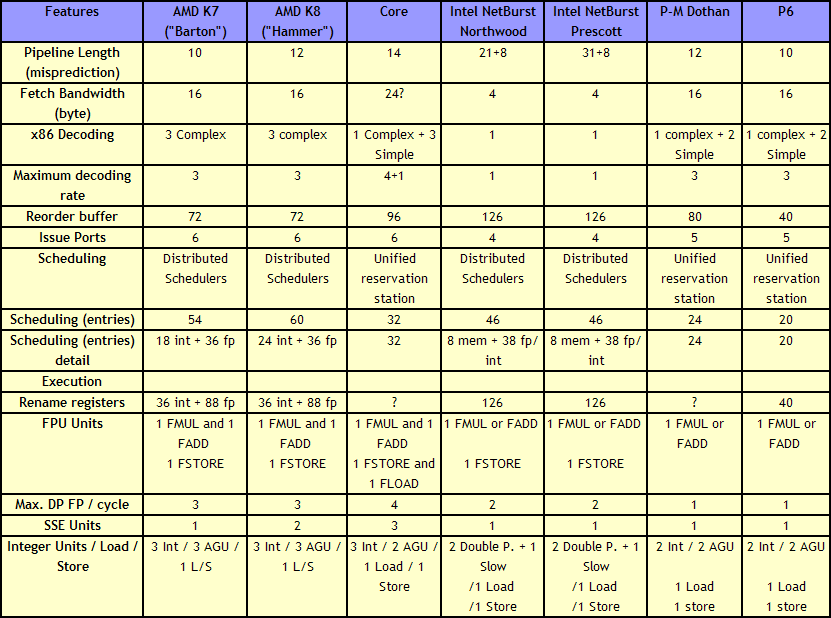
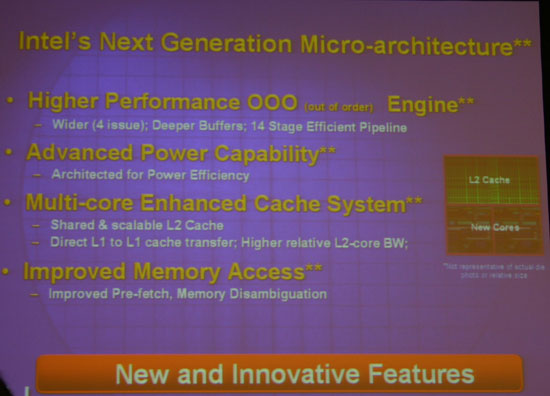
Conroe is essentially an expansion of the Pentium M architecture; it consists of a 14-stage pipeline (the Athlon64 uses 12) with 4 instruction decode units, 3 integer units, and 3 (2 concurrently-operational) 128-bit SSE units (compared to 2 64-bit SSE units in the Athlon64).

Conroe also utilizes prefetching to a greater extent than the Pentium 4 or the Athlon64 but still gives priority to loads. I think the most interesting optimization added to the Core is Memory Disambiguation; in Intel's implementation, a dynamic alias predictor is used to determine if a preceding store will be writing to the same address as the pre-empting load, and since the likelihood of this is reported to be 1-2%, having loads execute out of order allows for a large performance boost. For more detailed information, check out Anandtech's article comparing the two architectures here.

Ultimately, I am just glad to see further advancements in computer architecture and more competition; in fact, it looks like the Athlon64 5000+ should be under $300 in the near future due to the Core 2 Duo. Memory bandwidth constraints has been a limiting factor in microprocessor systems for at least the past 5 years, and the approaches taken by AMD and now Intel allows to better utilization of the resources available. The on-chip memory controller utilized in the Athlon64 and the prefetching, load forwarding and out-of-order execution techniques, and the larger caches present in the Conroe-based processors demonstrate the acknowledgement of better memory utilization in modern microprocessors. It also allows for more efficient use of the hardware, as demonstrated by lower power consumption in both the Intel and AMD CPUs. Ultimately, the Pentium M team chose the right approach by creating a more efficient microprocessor design for power consumption, and likewise for the Athlon team in terms of staying competitive.

AMD has had such a large influence on Intel; competition is great! The Netburst architecture died away and a more natural upgrade to 64-bit was adopted. In addition, NVidia has become a significant force in chipset development; SLI has become incredibly popular and NVidia continues to make an excellent chipset for AMD and Intel systems.

Alright, that ramble lasted a bit longer than I anticipated...

Now, Net Neutrality... I currently view the internet as an equal opportunity and free market. Anyone can create content that can attract lots of attention, or start a unique business that can generate a lot of revenue. It has definately diversified the marketplace, and has allowed people to voice their opinions to the entire world. Video and voice services have become more popular with the emergence of broadband connections to homes, and the transmission line business has expanded to coaxial and wireless. Of course, companies like AT&T would like a cut of the revenue as Internet media transmission expands; they have become obsolete for phone service and cannot effectively compete with IPTV without dedicated bandwidth for their services. According to Ted Stevens, what these transmission companies really want to do is charge a delivery fee to companies, similar to FedEx and UPS, which is bullshit. In addition, any kind of prioritization on the internet would employ a more capitalistic market, changing the internet from a free market to an industry that would require a company to have large amounts of capital to start a business; essentially created a new tv or movie industry.

However, I also believe that Quality of Service may be an important issue in terms of transmission of data over the internet. Video and voice services require a certain amount of bandwidth and a lower amount of latency to stream effectively over the internet. Quality of Service should be a standard incorporated in the Internet, so that voice, video, and gaming packets, for example, receive enough priority in the transmission of bits for proper streaming. Rather than trying to create a market and rely on monetary discrimination, upgrade the service / infrastructure and charge more to companies and/or consumers, if need-be. I would rather see the Internet improve and remain open but potentially pay a little bit more for the connection than run into another instance where alternative methods are seeked to reduce the immediate costs to the consumers but impose "delivery fees" for content and services in the future.

If anybody ends up reading this and has an opinion on Net Neutrality, please express it below, as I would like to have a good discussion concerning it.

Thursday, July 13, 2006

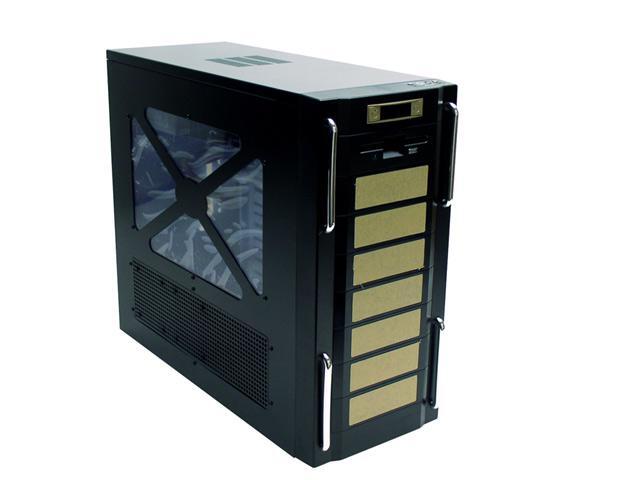
Check out this Dell concept modular PC image taken from yankodesign.com.

Sunday, July 09, 2006

Alright, it's time for me to ramble about how fuckin' scared I am over this AT&T bullshit. When I heard that SBC and AT&T were merging last year, I was in awe, but I still had a little bit of faith with our Justice Department. The baby bells were becoming one once again, and nobody was stopping them. Granted, the power the telephone industry once had has dwindled, but that does not justify the reconstitution of an entity generating hundreds of billions of dollars a year. To make matters worse, AT&T has recently announced that they would like to acquire Bellsouth, created a duolopy between Verizon and AT&T, and in turn Cingular. $130 billion dollars in revenue per year...and we thought the oil industry was ridiculous. Here's a breakdown of the Baby Bell monopoly. I hope this judge gets his say.

Friday, June 02, 2006

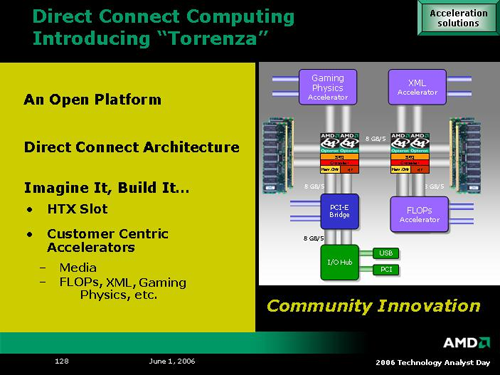
AMD is taking an interesting approach for their next generation microprocessor products through the implentation of modular cores. By openly licensing AMD's HyperTransport technology, the next generation AMD platform, the K8L, will essentially allow system manufacturers and ultimately consumers to increase the performance and featureset of their multiprocessor setups by connecting third-party coprocessors directly to the processor. AMD is also planning on breaking up the K8L into modules, which will allow AMD and potentially server manufacturers to customize the microprocessor to their needs, adding more cache and memory controllers as needed.

Intel and AMD have been embracing chip multiprocessors through the implementation of multiple cores on a single die, and AMD has just taken it a step further. A while back I wrote about the possibility of placing a GPU on the motherboard rather than requiring a seperate graphics card altogether, allowing for lower communication latency and higher bandwidth between the microprocessor and the graphics processor, and this approach in chip design may actually make this a viable solution. In addition, it brings a smile to my face whenever topics I've read about in my advanced computer architecture classes become part of a real design, especially when my professor last semester, James Smith, wrote a couple papers and an IEEE article about modular cores. I'll have to put up my research paper about chip multiprocessors on this site one of these days...

Anyways, check out the Anandtech article covering AMD's next generation microprocessor technologies, and if you could so kindly leave some constructive comments about it, one day someone might stumble upon this post and make you famous.


Update: Check out this image I snagged from an Inquirer article.

Thursday, May 18, 2006

Alright, it has been a while, and I'm not making an official posting (or revamp, for that matter) yet, but I have to say, finally. AMD chips can now be found in commercial Dell boxes! Albeit 4-processor servers exclusively, it is still a feat. Trying AMD products in one product line is more likely to lead to an expansion of their AMD-based systems in the future than naut, and this really demonstrates how far behind Intel has fallen with product catalog, aside from future designs. Speaking of which, the Pentium M design is finally spreading to desktop PCs, something I've been waiting for, although it would still be nice to see the ultimate x86 architecture design. If Intel and AMD would combine the best of both their architecture technologies, a highly scalable and advanced dual or quad-core 4-way superscalar processor with a large amount of cache would be amazing...maybe it's something that will arrive closer to realization with decreases in die size, as I do realize the memory controller in the AMD chip probably occupies a decent amount of die space that could be occupied by a larger cache and maybe a beefier core.

Anyways, here I go rambling again...the point of the matter in this specific posting is to point out how far AMD has gone...to demonstrate that even the most devotional company to Intel (aside from Apple, at the moment) had to cave due to a better performance and highly scalable x86 server CPU, the AMD Opteron, and to put the final nail in the coffin, one that solidifies AMD's stellar reputation in the chip industry.

Tuesday, January 24, 2006

Speaking of Google, I might as well applaud the company for refusing to submit search result statistics to the government. I hope the trial pans out well for Google...and the rest of us. We don't need the government gaining another method of evading privacy, such as finding out who is performing what searches. Other than reading about it on the news, I was surprised to hear my Professional Expression professor mention it; he also mentioned students he's known wrongfully questioned for a library book request and an email to a friend in Italy after the incident there not too long ago. I'm glad that these issues are getting the limelight...hopefully we'll hear good things next month when the Patriot Act extensions that are set to expire actually do expire...or are at least revised. I want to be able to communicate with my relatives in Egypt and Jordan and borrow a book about communism without having to be questioned why, or worse.
Here's an interesting Slashdot headline concerning the Google executives and their salary. Supposedly this will be the second year they will only be pulling in $1 per year...pretty cool, huh? Well, I guess one could associate wise business decisions to that...more money stays within the company while they sell of stock, taking advantage of the $400+ stock price. And, thanks to Bush's tax cuts "to the wealthy" in 2002, income resulting from stock sales are taxed a lot less than income tax. Ultimately, though, although I don't approve of the way he said it, Tackhead makes a good point: it would be nice to see the government spend a lot less on the Pentagon. Anyways, I think the Google executives are only accepting $1 in salary as a statement for the company, more than anything.

BTW, I thought the food stamp remark was funny.

Tuesday, November 29, 2005

$100,000 for a virtual space station?!?! But this was no joke, and Jon Jacobs thinks he can make over a million dollars in virtual taxes in 1 year! I guess it might be time to start investing in virtual equity now...Hiro Protagonist's (Snow Crash) knew what he was doing. Check out the Cnet article here.

Monday, November 28, 2005

300 GB of storage on a "Holographic Versatile Disc" (HVD)...hmm. Check out the Slashdot article here.

Wednesday, September 28, 2005

I know MIT's $100 prototype computer is old news, but now that CNET has photos available for the $100 laptop I thought I'd make a posting about it. I think it's funny that the photos advertise this laptop to function as a handheld, ebook, laptop, tablet pc, "theater", and writing pad; considering their optimism for this device, it's hard to believe the price tag will remain at $100, especially considering the form factor and the likely demand to arise from wealthy markets as well. Probably the coolest feature on the laptop is the hand-crank used to charge the battery, and funniest goes to the ac cord that also functions as a handle :)

Thursday, September 01, 2005

When I first moved into my new apartment one of the first things I noticed was an old Primestar dish sitting on the roof next to the porch. Primestar was bought out by DirectTV in 1999 and unfortunately no longer supports Primestar dishes (so it won't be possible to share my dad's DirectTV service) but I found a page that describes how to convert the dish into an 802.11b antenna. Although not terribly useful, if it can strengthen our wireless signal for the porch and our attic it might be cool. We'll see if I have the energy to try it out sometime...

Wednesday, August 31, 2005

Wednesday, August 24, 2005

Intel is finally making some progress in the right direction for the desktop market by replacing the horribly inefficient Netburst architecture. The new architecture of currently no-name will consist of a 14 stage pipeline (2 more stages than the Athlon64 which will primarily provide Intel with more headroom for frequency) and a 4-issue core; in turn, this chip will be very competitive with the current Athlon64. More information can be found here.

A hard drive and dvd burner combo will soon be available from Hitachi supporting up to a Terabyte of data. Now I just need to convince Jesse to pick one up for Bascom (and maybe one for myself as well) :)

Thursday, July 28, 2005

Well, my crappy Kyocera KX-414 (Phantom) cell phone has finally decided to stop responding to my A/C charger. It's been sending warning signs for months, and I ended up buying a new adapter last month to continue pushing it, but I can no longer get it to charge, so I'm using a friend's cell phone temporarily until I manage to replace this one.

On a sidenote, since my PDA isn't much use during the summer (my schedule of 11 - 5 M-F isn't very complicated), it's been sitting on my desk for months. The Handspring Visor Deluxe isn't doing too well these days; the casing is scratched to hell, I no longer have the plastic screen cover nor the Springboard spaceholder, and the mp3 player I purchased for it last year no longer works. I've been searching for a new PDA for almost a year now, and either I end up passing up decent deals at Dell for Axims or just decide to wait for something better.

Well, now that I need to purchase a new cell phone, it may be time to look into getting a Smartphone (a cell phone with built in PDA functions). U.S. Cellular doesn't give me many options, but since I'm sharing plans with my parents, I'd rather not switch, so I've been looking at the Kyocera 7135 Smartphone. It is equipped with a whopping 33 MHz Motorola processor (twice as fast as my visor), powered by Palm OS 4, includes a color screen, and SD expansion. It should last a few hours for talk time, around 8 hours for mp3s, and a few days standby. Although the CNET review isn't entirely accurate, it provides a decent summary of the device and its features.


One lacking attribute is the OS/Processor: without Palm OS 5 and an ARM-based processor, I won't have the flexibility to play video using any format but, more importantly, I won't be able to use the currently available WIFI SDIO cards. Although both of these features are meaningless with such a small screen, they would still be nice to have, and are characteristics I was looking for in a replacement PDA. However, I believe this may be the phone/PDA I will settle for, at least until the price comes down on the beauty called the Archos Pocket Media Assistant (PMA400). This $800 beast can play and record mpeg-4 videos and play mp3s using the equipped 30GB hard drive, and bundles Linux with PIM functions and WIFI with the Opera browser! Maybe one day I'll be able to at least hold this device in my hands for a few minutes, and maybe even get to have one to carry around, and just use WIFI for phone service using VoIP :)

Friday, July 22, 2005

Oh, snap, I finally feel like posting an update to my blog! Actually, I just wanted to leave a comment concerning this depressing fiasco over Hot Coffee for GTA - San Andreas. I guess we were bound to reach the point where game programmers and developers have to start being more careful over what type of content can be found in games and lock down features/hacks. To keep games fresh with unique content and in part to keep programmers happy, game programmers need to have freedom to be creative with their games. Instead, now that Take Two is getting in trouble over such an insignificant hack (I mean, come on, you can unlock nudity in the Sims, but no one complains about that), game publishers are going to have to lock down game content and options to ensure that ratings are met and political mothers concerned about their children's exposure to violence doesn't involve sex. Since game development is approaching the heights of film production, I suppose this was bound to happen; now we have to wait for the indie game publishers to spawn and give us something fresh and creative.

Anyways, I wish I could say that my new website is coming along great, but all I can say is that I chose a background for the page, but since I've installed Windows x64 I haven't reinstalled Dreamweaver or Photoshop so I haven't put further development into it. Hopefully within the next two weeks I can whip together a decent webpage to prepare for my return to college. Later, G's.

-------------------------------------------------------------------------------------

Friday, April 08, 2005

Tom's Hardware is hosting an article about a 1.8" 30 GB hard drive. Why isn't this 30 GB hard drive in PDAs today? I've been watching the Archos Pocket Media Assistant, which can record and playback video, music, photos, stored on a 30 GB hard drive (not sure if this is the same drive), and is running Linux equiped with many common PDA apps. However, the price tag for this device is $800. One day soon, I want to be able to pick up a device just as good or even better for between $300 or $400 (I hope).

Thursday, March 17, 2005

HP has thought up some cool tricks to help reduce power usage in laptops. The technology allows a laptop to only brighten the part of the screen that is being used, and apparently this can increase battery life by up to 11 times...check it out.

Wednesday, March 16, 2005

Hmm...looks like Microsoft really is ready to embrace Sun. Sun seems to have contributed some of their latest AMD Opteron servers and workstations to Microsoft, and at least one of the Microsoft employees was excited enough about them to spill the news on his blog. Check out the Register article here.

Monday, March 14, 2005

Hmmm...AMD or Intel chips on the same motherboard? Interesting...hopefully anandtech or Tom's Hardware will follow this up with a review. Thanks to mcmullet for the heads up!

Saturday, February 19, 2005

Burn labels for DVDs just by placing the DVD in the burner facedown and pressing Record! Read more on the LiteOn-built DVD burner with Lightscribe technology at Tom's Hardware.

Wednesday, February 16, 2005

Microsoft...conforming to standards?!?! Check out Opera's CTO Hakon Lie's response to Bill Gates's call for interoperability.

Friday, January 07, 2005

Well, now I realize how bulky my USB flash drive / SD card reader is, after seeing this SD card with built-in usb connector.


Damn, that's cool, even if I'll be paying quite a bit more for the card and increase the likelyhood of dropping and losing it.

Oh, and Happy New Year!

Friday, November 26, 2004

Wow...last post was more than a month ago. I'm sure by now no one checks this blog :P

Anyways, just wanted to quote Gmail on Thanksgiving...here it goes:

A Gobble approach to email.

In 1621, a few hundred Pilgrims and Native Americans sat down to celebrate a bountiful harvest. The feast lasted three days, and included fowl, venison, fish, berries, watercress, lobster, dried fruit, clams, and plums. There was no pumpkin pie, however. There was also an alarming lack of user-friendly webmail services.

Now, 383 years later, it's once again time to celebrate what has come to be known as Thanksgiving—a time to gather with family and friends and give thanks for all that we have. We have many things to be thankful for. But mostly, we are thankful for you—our users—who remind us of why we work so hard all year and why we love what we do. That's better than all the dried fruit and clams in the world.

Happy Thanksgiving! Thank you for making our approach to email yours.

Gobble gobble,
The Gmail Team

Thursday, October 14, 2004

WOW...Intel finally admitted to its mistake with the Pentium 4 and, in particular, clock speed scaling with the Prescott chips to improve performance. The article mentioned that Intel plans to de-emphasize clock speed and focus on improving other parts of the chip, including adding cache and using dual-core configuration next year. We've already started to notice the change through Intel's decision to use model numbers for their chips, and now it is official.

There is also a mention that Intel does plan to port the low-power and efficient Athlon-clone (aka Pentium M) to the desktop. Code-named Merom, the release of this desktop chip will finally bring Intel in line with AMD and is a good direction for the desktop processor industry.

Monday, October 11, 2004

OK, quick post: this is an article that I've had open in Opera for too long now, and since I have to start closing down some tab, here it is.

AMD has recently added engineers from the Sun UltraSparc V line, since Sun has decided to only focus on development for UltraSparc IV and x86 processors, etc. That, in addition to engineers from Digital Equipment's Alpha group, will make a formidable team to continue making efficient, powerful, and price competitive processors. Read more here.

Tuesday, October 05, 2004

Open Source - How Should It Shape the Computer Industry

A big topic in the computing world lately has to do with open source licensing. What should be open sourced, and what should remain copyrighted? The BSD license is different from the GPL in that it allows source code to be used in a commercial product; this seems reasonable because otherwise the entire software industry will move towards services. We're seeing that already with Red Hat, IBM, and other Linux-based companies, but we're also seeing companies like Sun and Novell who clearly make it known that proprietary technology will remain a large part of their business, and that the open source community can work with the business world to create products, not just services.

I would agree with the way the BSD license works, since it does allow for innovation beyond the base product. Bill Gates makes a point by saying that there will still be complex tasks that would be best accomplished in an open source environment (the video can be seen here). In the end, however, business will determine whether these BSD-based products will have enough contributions beyond the base product to have a value.

Jonathan Schwartz also argues in his blog that although Sun open sources some of its software (OpenOffice/StarOffice), software patents are necessary to incent "inventors to invent, and investors to invest". He does mention that there is a difference between open standards and open source, and that is where things get a little hazy. I would like to believe that open source software pushes for standards in areas where the standard is too complex to document (i.e. an operating system), and by commoditising software by creating an open source derivative of something a standard is essentially created. Open source is just a subset of open standards, so I am not implying that commercial software or support cannot be created around open source or open standards.

I guess we'll see how things pan out in the future of the software industry. We are already seeing two sides form, one based on services and the other integrating open source products in commercial goods. For the industry to remain as large as it has been these past few years, this mix is necessary.

Thursday, September 30, 2004

Dual Processor Motherboard...CPU and a Graphics Chip?

ISA, PCI, AGP, and PCI Express all have one thing in common: they are bus interfaces that allow you to extend the capability of your motherboard through add-ons such as a graphics and sound system, network connectivity, etc. We've already seen built-in sound and network systems, and basic integrated graphics. However, the graphics system is second only to the CPU in terms of power and performance, and is very relavent to the speed of the computer. The system bus is constantly improving to accomodate for the bandwidth demand of the graphics card. So why isn't such an important component an actual part of the motherboard? Just like we can choose a CPU and replace it when an upgrade is due, why can't we just pop out a graphics chip and replace it with a newer one?

I will admit that many of the newer motherboards are crowded enough as it is, but integrating the graphics chip into the motherboard, along with its own set of memory, would eliminate the bottleneck of the PCI bus (assuming the graphics chip is connected through HyperTransport or a similar technology) and make the graphics system a more regular and cost-effecient upgrade. All that would have to be replaced is the graphics chip; no board or memory to increase the cost.

Although a nice solution, there are a few negative aspects to consider.

- First of all, if the graphics chip ever changed in size, the motherboard would have to be replaced. However, if this method was ever adopted, the lifespan of the graphics architecture would be about the same as the CPU, so an upgrade should entitle some sort of processor upgrade as well.
- This option would be a limiting factor for people with older systems. AGP has been around for at least 5 years, a lot longer than a typical upgrade.
- The graphics interconnect system would be limited to the technologies present on the motherboard. On current graphics cards, the speeds between the graphics chip and the memory are typically "the latest and greatest". I believe some graphics cards use DDR2 and have a 1 GHz bus, which may be about right for current PC's, but using a graphics chip on an older motherboard would limit the graphics system.

From a technology standpoint, having the graphics chip on-board would be a more efficient solution overall. However, the positive aspects have to outweigh any negative ones, and in this case, the race is close. I guess we'll see what happens in the future, especially when Intel comes up with a solution similar to HyperTransport.

Wednesday, September 29, 2004

Looks like the online music industry is moving in the right direction...Buy.com's music store now offers a choice in bitrate. When you purchase a song, you can choose whether you want to download a 256 kbps or 128 kbps version of the song. It's WMA so 256 is as high as you can before you hit lossless. The prices are also pretty reasonable; although most songs seem to be $.99 each, it was only $7.99 for the Skindred album. Unfortunately, not all of the songs are available at 256 kbps yet, so I'll have to hold off for now. Of course, the selection is limited to mostly popular artists, so it's hard to find some independent bands. With the number of available songs increasing and bitrate approaching lossless, soon we will be closer to a viable CD replacement. Next up: offering album inserts, CD art, and 5-channel audio.

Tuesday, September 28, 2004

Hello all! I'm just blogging from Illinois. I meant to see Strike Anywhere live, but traffic prevented us from doing so. Guess it's alright...having fun at my friend Keto's place drinking and stuff. Hopefully one day I'll be able to see Strike Anywhere live again...we'll see what happens. Gotta go...later.

Sunday, September 12, 2004

Two Computers in One


At the Intel Developer Forum last week, Intel demonstrated dual-core chips incorporating the Itanium (Montecito) and the Pentium M (Napa) architecture. The Itanium system demonstrated contained 4 dual-core chips using HyperThreading, which appeared as 16 processors on the task manager in Itanium Windows (crazy, huh!). However, Itanium incorporates a new architecture that breaks away from x86, so don't expect to be using a desktop with an Itanium CPU for years to come.

I am particularly anticipating the arrival of the Pentium M dual-core chip, code-name Napa. The Pentium M architecture, designed by a team in Israel, is similar to the Athlon chips in that, instead of focusing on clock speeds, improvements to other parts of the chip are done to enhance performance. It is an excellent mobile chip that is very competitive with both Intel and AMD desktop offerings, and its lower power consumption makes it ideal in a dual-core setting.

I'm not writing this article to tout Intel's next generation of chips; AMD announced and demonstrated a dual-core chip of their own a couple of weeks ago. Since the Athlon64 architecture includes HyperTransport and the on-board memory controller, it has been designed from ground-up to support dual-core processors. I can't wait to read about all of these chips and the performance we will see out of them when they arrive sometime in 2005 (hopefully).

But there is one more remark I would like to make about Intel. Last fall, Intel announced a work-in-progress called Vanderpool. Vanderpool is a chip technology that will allow you to use one processor to run multiple operating system. With dual-core processors coming out next year, it would make sense to incorporate such a technology into these chips. Just imagine being able to run both FreeBSD and Linux (or Windows) on the same machine at the same time. With a multi-monitor and keyboard/mouse configuration, you could be playing a game on one core and watching a movie on the other without much impact on either tasks.

I can't wait for Vanderpool to be introduced into the PC market. With a technology like that, I think I might have to jump back to the Intel camp, or AMD will definately have to take advantage of their cross-license agreement, if possible. One other note I wanted to make about Vanderpool is how Intel could use it to gain market share with Itanium. Itanium has been slow to catch on due to high costs and limited software availability. Since Intel has already announced their plans for dual-core Itanium, it would be pretty cool to see a dual-core Itanium-Pentium chip. With Vanderpool, Intel will be able to vouch the ability to run native Itanium and native Pentium applications. Although both cores cannot be combined, it would be a good entry-level product to get people to start using Itanium. I guess we'll see what Intel decides to pull out of its sleeve in the coming years.

Love You Computer_Viren_Hacker_Kultur


Reverse engineering software to create computer viruses has always been looked down upon by companies and users alike, but rarely do we take a moment and look at how amazing viruses are. A convention, originally held in Frankfort, Germany in 2002, is being held this year in the U.S. and Denmark. People will be able to infect disconnected computers to watch a virus propogate and play a game to see the large scale effects of them. If anyone wants to head over to Brown University this month, I'm down...the event started September 11 and will end October 4.
100 MBits/Sec for $80/month? Why isn't this an option in Madison...

Monday, August 02, 2004

Well, I've been busy this past week, mainly with work and finishing up what I need to for my classes before my trip to Egypt/Jordan. I will be leaving tomorrow morning, and will return around August 27.

Here are some articles I meant to post links to but haven't till now:

Homeland Security protecting Bill Gates

"Big Brother Awards are now held as an annual event in 17 countries. Each event typically focuses on privacy violations in the host country.

But Privacy International opted to make an exception this year by including in the U.K. awards a U.S. initiative, US-Visit. This security program requires that most foreign visitors traveling to the United States on a visa have their index fingers digitally scanned and a digital photograph taken, so that immigration officers can verify their identity before the visitors are allowed entry into the United States."

Free Speech Zone at the Democratic National Convention is full of cameras and surrounded by barbed wire.

Monday, July 26, 2004

Articles for the Early Afternoon Time

Introducing the iPod London toilet guide - The Register

"Developed by digital media firm Nykris for reasons probably best known to themselves, pPod is a multimedia toilet guide that combines written reviews and hilariously appropriate sound tracks (Handel's Water Music, for instance) to help people find the "loveliest" facility in their vicinity.

Just what the world was waiting for."

And in other news...RealNetworks breaks Apple's hold on iPod

Months ago, RealNetworks CEO Rob Glaser attempted to meet with Steve Jobs to discuss opening up the Fairplay DRM License used with files purchased on the iTunes music store and the iPod. However, the plan was a failure when Steve made it clear that he was not interested in opening up the iPod. Apple has previously stated that the reason for the iTunes music store to exist was to sell iPods and that the music store cannot generate enough revenue on its own. Even though the Real Music Store will also help sell iPods by supporting them, Apple refuses to budge.

Looks like the tables have turned...persistence is a virtue. RealNetworks announced today that they are working on a Helix DRM-extension called Harmony. This software allows the RealNetworks Music Store AAC files to be ported to any device regardless of format, whether the device uses iTunes-based AAC Fairplay or Windows Media. In comparison to iTunes and the WMA-based music stores, RealNetworks already offers great features through its music store. In particular, I actually wouldn't mind paying $.99 a song for 192 kbit AAC files vs. 128 kbit iTunes AAC or 128 kbit WMA. I would definately start buying albums online if the songs were encoded with lossless compression (such as FLAC...might as well give LiveDownloads credit for leading the way) and, since I still like purchasing groups of songs called "albums", the album cover and insert in pdf format.

Anyways, looks like RealNetworks, in terms of services and base software and codecs, is heading in the right direction. Real Player will start to fade away in the coming years as the Real-supported Helix open-source player becomes more popular. In addition, the RealPlayer video codec remains competitive with WMV and Divx, and Helix DRM seems to be the way to go, thanks to support with multiple formats and potential porting to different operating systems and devices.

Good Luck Real!

Friday, July 23, 2004

Quick Post - Just wanted to upload my current desktop scheme for fun. My desktop background is from the Anime series Fullmetal Alchemist. The skin I'm currently using in Trillian is Microscopic Pro 2.0, with the Brushed Metal theme, and Trillian is set to change my windows to Black and White when they aren't focused. I'm currently using Taskbar Activate to hide the taskbar completely. Check it out:

Monday, July 19, 2004

Come on Baby, run Linspire...

After continuous legal battles throughout the world, Microsoft got what it wanted...Lindows has now officially become Linspire. Although Michael Robertson gave up after being very determined that Lindows was here to stay, it is probably the smartest move for the company. Partially to make the Lindows people happy, and partially to replace the original Lindows Flash animation, a new Linspire animation was created, based on The Door's "Light my Fire".

Wednesday, July 14, 2004

Just thought I'd post about the LAN party this past weekend, mainly to read some comments on how people thought it went. It took a lot out of everyone to set up all of the computers, and I have yet to finish cleaning up and return the tables to my room. I was pretty stressed out Friday night, and I hate hearing complaints from everyone; I tried, but I'm sorry I can't make everyone happy. Luckily by Saturday things went a lot more smoothly (not counting the occasional power outage). We will have to watch the appliance usage closely next time; I'll have to post signs through the apartment or something.

It would have been nice to have more time for gaming, but we had a good balance between drinking soda and sitting outside and playing games on our computers. Even though I thought the "human vs. bots" games were enjoyable for everyone, and challenging enough, I know one thing we didn't do much of was team-based Battlefield and UT. Hope you guys weren't too disappointed with that.

Anyways, I'd like to hear what you all think (even though my hunch is that they're all going to be negative comments based on the topics I outlined). If you feel that I did a crappy job "preparing", let me know what I should have done to get ready. I believe there's always going to be obstacles, but overall this apartment was the best place for the lan, and this past lan party turned out to be a lot of fun.
AT&T is setting up the powerline broadband infrastructure that could offer WiFi in our neighborhoods. By pumping 13 mbps through the power grid onto WiFi repeaters located on light posts, up to 3 mbps is offered for each trial customer. Read more here.

Monday, July 12, 2004

Are you ready to take the Google challenge? Solve an equation and you've completed the first step in the hiring process to work for Google.

Instead of just posting a "Now Hiring" sign, a Billboard found in Silicon Valley contains a URL composed of the first 10 prime digits in e. Part of the human resources function can now be completed through solving a mathematical problem floating on the web. Read more at news.com.
Josh Sutinen just sent me a link to an mp3 on the DamagedGoodz server. It's a Bud Light radio ad presenting Real Men of Genius - Mr. Company Computer Guy. "You are the guru of the gigabyte, the monster of the memory...without you, computers would megabyte...the countless hours we spend surfing the internet and accidentally stumbling upon porn sites would instead be spent working."
Here's an interesting image I thought I'd do a quick post on. I was searching for benchmarks between FreeBSD, Linux, and Windows, and found an arabic forum. Although I can't read anything on the page, I found this image and laughed.

Friday, July 09, 2004

Fuck...
http://go.hotwired.com/news/politics/0,1283,64144,00.html/wn_ascii

Guess that's how I feel when the government can conclude that I'm a terrorist based on what I read. I'm glad 1984 is a novel I've finally started reading, and I totally agree that the "power of its admonitions...seems to grow, not lessen, with the passage of time."

Oh, and I just love the fact that the GOP delayed the vote 20 minutes while they convinced 10 Republicans to change their vote. Fuckin' Congressional POSERS!!!

OK, I don't usually converse like this but it was the only way to convey the same feeling :(

Sunday, July 04, 2004

Heh, guess it's been a while since my last post. I've been busy with classes, work, and setting up and playing with my new computer. Moving up from a 450 MHz Pentium III, I sure do notice a difference in performance. To paint a picture, I've gone from 100% CPU when browsing the web with Opera and an average of 5 pages open and listening to music on Winamp to 25 - 50% with an average of 10 pages open on Opera and listening to music with Milkdrop. It is really nice to be able to max out settings in Unreal Tournament 2004 at 1280 x 960 and still have smooth gameplay. In response to a great bundle deal I participated in for my motherboard and CPU, I was able to save quiet a bit and still get an amazing system. There was a slight change in my original plans, but overall I am happy with this setup. The following are the final specs for those of you who are interested:

Asus K8V SE Deluxe - This motherbaord wasn't the MSI K8N I was so excited about, but it performs well. It incorporates a VIA chipset and has the typical features of today's motherbaords, including Gigabit ethernet, support for RAID and SATA, and 6 channel audio. I had a little bit of trouble with getting the Windows XP Setup to detect my Serial ATA drive, and unfortunately I cannot say that I was successful. It would not accept any of the drivers I was throwing at it (after pressing F6 for custom "SCSI" drivers); I even attempted to alter the txtsetup.oem files for both a VIA and Promise driver set I tried, but received the same error: (Will update later with the actual error message). If anyone knows what was wrong please post a comment about it. Luckily I found out why my partition clone didn't work (I was using a temporary 30 GB hard drive until I received the new one) and everything is fine now.

Athlon 64 3200+ - I was in for a surprise when I received this CPU; the 3200+ I received was actually one of the newer ones with 512 KB of cache but a 200 MHz faster CPU. I'm not sure how much of a difference this makes, and I know that most of the enthusiasts on Anandtech would be really bothered by this, but I don't really need the bragging rights associated to 1024 KB cache and I don't plan to overclock, so I am content with a 2.2 GHz 3200+. Before I found this bundle deal, I was planning on getting a 3000+ anyways, since the only difference between the two was going to be 512 KB vs. 1024 KB cache, so I'm not much for complaining.

In terms of temperature for both the MB and CPU, here are my results based on Asus Probe 2.0:

CPU: 35 C with Cool N Quiet, ~50 C running UT2k4
MB: 40 C typical, jumps to around 45 with UT2k4

I currently have a fan on top and in the back of the case. I may have to customize the case a little because the top fan has to go through two grates.

MGE G-Box 8011 - I'm afraid I didn't end up purchasing any of the cases that I mentioned on my previous post. It took me a long time but I finally got to the point when I had finally ordered everything but the case and had to make a decision. Overall, I was very happy with it. The G-Box is a very nice looking case and very solid. I love the top USB and audio ports; unfortunately, I have to add some shielding to the audio connector because there's interference from components in the case. I didn't care too much for the power supply since I purchased my own anyways, and although I didn't want anything to flashy at first, this case did not come with any LEDs, which may have to be remedied the next time I feel like like playing with the exterior. Anyways, here is a image of the case...visit the Newegg page for more.


Fortron 400W FSP400-PFN Power Supply - I looked at many reviews for midrange PSUs and came to the conclusion that this was the one to look for. It is a quiet power supply that performed very well against more expensive competitors and provided enough wattage in the +3 and +5 range for AMD CPUs...more can be read at http://www.anandtech.com/showdoc.html?i=1841. The rail voltages for a PC with a 3200+, Asus mb, DVD burner and CD drive, and 9800 Pro are as follows:

+3.3 V : 3.312 V
+5 V : 4.999 V
+12 V : 11.584 V

The +12 V is a little low, but considering the devices I have plugged in I'm not holding anything against the PSU...it was a $60 power supply after all. These voltages are stable and were recorded from the Asus Probe 2.0. The only thing the +12 V rail will limit me with at this point is overclocking, which I'm not too concerned about right now. I need to concentrate on a little more cooling first.

Other Components - My 1 GB of Kingston ValueRAM seems to be doing fine. Since it is at CAS 3.0 I may have to try overclocking it a little and see how low I can take it, but I'm not too concerned. The Serial-ATA hard drive is noticably faster; even without enough reboots for XP to optimize boot time, it has started up around 5-10 seconds faster, and load time for most applications has improved, including UT. Of course, I didn't forget to mention that I am extremely happy with my ATI 9800 Pro 128 MB, and I got an excellent deal on it. I haven't yet had a chance to mess with a high performance NVidia card, and I would love to see what kind of features the driver offers, but I will have to hold off until my next upgrade.

Hmm...4 AM again. Just a few more things to copy over and install on this computer and I can finally take down my old computer for good. I have it plugged into my other monitor and I know it's just begging for attention. Maybe I'll give it one last run soon before I wipe it clean and try to make it into a media center PC for my parents.

Happy 4th all...I'll be sure to put my game on for the celebration.

Wednesday, June 23, 2004

Here's a news article worth mentioning: "Hotmail to offer 250MB of free storage"

It just makes me laugh...thanks to Google, both Yahoo and Microsoft have responded by adding significantly more space to normail mail accounts. Just imagine what things would be like without Google...inferior search engines, less innovation, incredibly small mail storage space, or in other words, less competition. Read more here.

Thursday, June 17, 2004

Here are some articles I found that I wanted to mention a couple of days ago:

Sony XYZ 3D Car GPS System - Well, the title is self-explanatory...just take a look at these images.


It really does look like a PS2 game!


Here's how it looks on the dash. Check out the Wired article here


DualDisc - "It’s not a CD. It’s not a DVD. It’s both. It’s a DualDisc." Basically, you've got a CD on one side and a DVD on the other. Sounds like it's here to speed up the progression from CD to DVD audio while minimizing cost; hey, it works for me. I can still listen to the cd with a normal stereo and get better sound quality and 5.1 channels on a DVD player. Read more here.

Google Gmail: Spook Heaven - As a current user of gmail (newsletters only, for now), I don't mind the method that it presents advertisements to me; when I read emails, Google scans them and presents relevant ads according to certain words in the text. No harm in that; I mean, I get a nice, clean interface and tons of space. The problem arises when the legal system comes into play. Google's advertising system gets challenged and is proven legal, and then the government would have more of a reason to build in filters in routers and ISPs to scan for certain words and have a right to read emails. Yes, I'm sure this already happens, but the large-scale image is what we're afraid of.

"Simply put, if a computer programmed by people learns the contents of a communication, and takes action based on what it learns, it invades privacy...Fundamentally, we should treat automated searches of contents as what they are: tools used by humans to find out more about what humans are doing, and provide that information to other humans. At least until the computers take over."

Click here to read more.

There were a couple of other articles that I was going to write about, but I can't find them at the moment, so I may choose to edit this page at a future date. Of course, feel free to leave comments.
I've been looking at power supplies for several days now, and I have to say that it is a difficult and somewhat tedious task; searching for reviews that accurately measure the performance of PSUs that I find on newegg.com and sorting through many pointless customer reviews on their site isn't exactly fun. I will admit that I am looking for a power supply at a reasonable price (around $50); it would have been much easier to suck it up and pay $100+ for an Antec or Enermax, or just live with the crappy 350W PSU that is bundled with the case.

However, I think I have found a match: the Thermaltake Silent PurePower 420W TT420-APD PSU (with an Active PFC). It seems to be an improved version of the same PSU, with the main advertised difference being the Active PFC. This feature is supposed to increase the overall power efficiency of the power supply, which should reduce heat while providing the same amount of power. The actual terminology refers to power factor, which is used by electric companies to minimize cost in distributing power to businesses. Read more here. This PSU can be found for $50 at newegg.com.

Monday, June 14, 2004

You know, Wisconsin has one of the most democratic Senators in the nation (Feingold) and one of the most republican Congressional Representatives (Sensenbrenner). While Feingold openly critizes the Patriot Act and was the only senator to vote against it, the Patriot Act II, or the "Anti-Terrorism Intelligence Tools Improvement Act of 2003", is making its way through Congress, and was introduced by Sensenbrenner. This ammendum to the original Patriot Act allows the FBI to induce penalties for public revelations of FBI demands and expands the government's surveillance powers. Another piece of disturbing news is that they may try to slip this bill in with the Intelligence Authorization Act, skipping review and possible changes to the bill. For more information, check out this Wired news article for more information.
I can't help but create a post about this: Starz Movies has finally released their Movie-on-Demand service with Real! An announcement about this service came about a year or two ago, and I've been silently waiting for it to arrive. Basically, you pay the same price as you would to your Cable or Satellite provider ($12.95 per month) and get access to "over 100 movies" on your PC; you can download and watch as many as you want, and it sounds like you can keep them on your computer as long as you want (assuming you continue to pay the monthly fee). It is definately better than paying for the Cable/Satellite version, unless you already have Starz-on-Demand through the cable company or you like to watch movies as they appear on the channels.

It's the best legal movie download solution I've heard of; you don't have to pay a fee for each movie you want to watch, and you can watch them as much as you want. It also works on up to 3 computers. The only limitation is the movie catalog, but Starz usually picks up some of the best movies (next to HBO) including Disney/Pixar, Sony Pictures, etc. I may have to try it out during my August trip to Egypt/Jordan, since we won't be paying for Satellite that month anyways.